





TechRadar Verdict
The KitchenAid KF3 is an excellent fully automatic espresso machine that will suit smaller kitchens in particular. It’s a compact machine that looks and feels very much a premium product. It’s refreshingly simple to operate and it brews a well-extracted espresso, although I found the milk-foaming system a tad underwhelming. It doesn’t cater to iced drinks as well as some other espresso machines, which could put off some potential customers, but for a fuss-free and relatively affordable espresso machine that looks the part, it’s superb.
Pros
- +
Excellent espresso every time
- +
Attractive, compact design
- +
Easy to master
- +
Great maintenance options
Cons
- -
Iced coffee brews at a lower temperature, but still melts ice
- -
Lots of rinsing cycles empties the water tank quickly with regular use
Why you can trust TechRadar We spend hours testing every product or service we review, so you can be sure you're buying the best. Find out more about how we test.
KitchenAid KF3: Two-minute review
The KitchenAid KF3 Fully Automatic Espresso Machine is the middle child of the company’s 2026 release of a trio of compact bean-to-cup coffee machines, sitting below the KitchenAid KF4 and above the KF2. Because of its slim build, it’s a great option for smaller kitchens, but it can easily service a larger household thanks to four customizable user profiles and a solid selection of over 15 coffee-based drink recipes.
It benefits from KitchenAid’s IntelliGrind system — also featuring on the company’s larger machines like the KF8 and KF6 — that automatically determines the best grind size depending on the beans you pour into the top-mounted hopper. During my testing, I found it consistently delivered a well-extracted and tasty espresso.
The KF3’s automatic milk system uses a hose that you need to place into your own container (the KF4 uses a similar system but includes a container), letting you make a variety of drinks including lattes and cappuccinos. Despite not claiming to work with non-dairy milks, I found it delivered a good level of foam when using a barista-style oat milk.
KitchenAid has given the KF3 a couple of iced coffee recipes too. As with the KF4, and other machines I’ve tested such as the Philips LatteGo 4400 Series, you need to put some ice cubes in your glass or cup first, and KitchenAid claims that the machine will brew espresso at a lower temperature. However, when checking the temperature of a regular shot at 'medium' temperature and an iced-espresso shot with a food-grade thermometer, both registered at around 40ºC / 104ºF, meaning the iced espresso was still hot enough to melt the ice, resulting in a lukewarm and diluted drink.
The other slight niggle I have with the KF3 is that it goes through water quite quickly as it performs a rinse cycle on startup and shutdown. I can understand the latter process to clean out the internals, and the rinsing of the milk hose to keep everything hygienic, but the start-up rinse cycle seemed unnecessary. Fortunately the rear-mounted water tank is quite large at 1.8L, but if you have a larger household or you drink a lot of coffee each day, you'll be refilling it regularly.
Overall, however, the KitchenAid KF3 is a fantastic mid-range automatic espresso machine that’s well made, brews delicious drinks and is ultimately easy to maintain. In fact, I'd say that it does more than enough to compete with the best coffee makers.

KitchenAid KF3: Specifications
Name |
KitchenAid KF3 Fully Automatic Espresso Machine |
Type |
Bean-to-cup |
Dimensions (H x W x D) |
14.2 x 7.7 x 18.5 inches / 361 x 196 x 470mm |
Weight |
19.8lbs / 9kg |
Water reservoir capacity |
1.9 quarts / 1.8 liters |
Milk frother |
Yes (automatic) |
Bars of pressure |
15 |
Noise level |
72dB grinding, 60dB brewing |
User profiles |
4 |
KitchenAid KF3: Price and availability
- Launched in UK and US April 2026, Australia in July 2026
- List price $999.99 / £749 / AU$1,349
The KitchenAid KF3 Fully Automatic Espresso Machine launched first in the UK and US in April 2026, and eventually made its way to Australia in July 2026. It has a list price of $999.99 / £749 / AU$1,349, meaning it’s one of the company’s more affordable machines, while being classified a mid-range option in the grand scheme of things.
Only the lower-spec KF2 is cheaper at $799.99 / £699 / AU$1,099 if you want an automatic machine, while the Semi Automatic Espresso Machine is cheaper still, although that naturally requires a bit more hands-on involvement.
The top-tier model in this latest series, the KF4 ($1,299.99 / £899 / AU$1,599) offers much of the same functionality as the KF3, albeit with a wider selection of recipes, a bigger touch display and ships with a milk carafe.
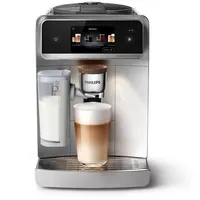
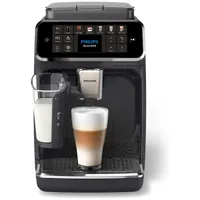
The similarly specced Philips LatteGo 4400 Series is also worth considering in this price range, with its list price of $799.99 / £599.99 / AU$1,199.
- Value score: 4 / 5
KitchenAid KF3: Design
- Compact size makes it great for smaller spaces
- Milk system is simple to use and clean
- No dishwasher-safe components
At first glance, the KitchenAid KF3 looks very similar to other models in the company’s lineup, from the KF4 and up to the KF8 (there’s currently no KF5). It’s more compact than the KF6-8, but the same size as the KF4 and KF2, at 14.2 x 7.7 x 18.5 inches / 361 x 196 x 470mm (H x W x D), making it easy to slide onto a kitchen counter. And slide it you can, as there are two small wheels on the bottom at the rear, so you can lift from the front and move it forwards and backwards with ease.

Looks-wise, it adopts a similar aesthetic as the rest of its siblings. It’s boxy, with rounded corners, and is available in either Porcelain White or Matte Black. To cut manufacturing costs, KitchenAid has ditched the predominantly metal build of the larger models, replacing it with plastic. It still looks and feels very much a premium product though.
The clearest indicator that lets you know this is the KF3 is the small 2.4-inch / 6cm color display. The KF2 doesn’t have one at all, while the KF4’s color screen is larger and touch enabled. It’s a relatively low-resolution screen compared to the likes of the Philips Café Aromis, but is still bright and clear, and the use of color helps to identify the drink you want to make.

The KF3's display is flanked by 10 touch buttons: four that provide quick access to user profiles, drinks menu, rinsing cycles and machine settings; two to initiate and cancel brewing; and four to cycle forward and back through menu options, return and select.
The top-mounted hopper is large enough to accommodate 250g of coffee beans and, as with the other compact machines in the series, it features a removable opaque lid with a silicone seal. This means you can’t easily see the amount of leftover beans (there’s a clear audible indication if it doesn’t have any to grind) but, then again, the beans aren’t exposed to light and air, keeping them fresher for longer.


Furthering its benefits for smaller kitchens, the lid is removable rather than hinged means it’s easy to fill the hopper if you have the KF3 positioned under a wall cabinet. There’s also a small chute for pre-ground coffee, and a scoop is included in the box.
The 1.8L water tank slides in and out the rear of the machine and has an integrated handle to make the process simple, although I personally prefer the side-mounted tank on the Philips LatteGo 4400 as it makes refilling a little bit easier. However, the KitchenAid’s tank features a hinged lid, so more often than not I would leave it in place and pour water in from a jug.
KitchenAid supplies a water filter with the KF3 that it says is good for around two months of use. It was initially a little fiddly to install, but the included coffee scoop doubles up as a tool that clips onto the filter, giving you the extra length needed to screw it into place.
The drip tray is deep and extends virtually the full depth of the KF3, and has a large spout at the back for easy emptying. Used coffee grounds are deposited into a removable bin in the center that can be tipped out when full — you'll see a notification on the display when it's time to do so.

The KF3’s milk system uses a silicone hose that connects to the side of the dispenser located on the front of the machine. You need to insert one end of the hose into a small socket, while the other end drops into a tall glass or bottle. KitchenAid offers a sealed container with a double-ended hose as an optional extra for $59.99 / £39 / AU$59, which is included with the KF4 by default.
The KF3 features a thorough rinsing cycle for the hose to ensure it’s kept clean, but note that none of the removable parts are dishwasher safe.
Lastly, the height of the coffee dispenser can be adjusted to suit a variety of cup sizes, including large mugs and tumbler glasses. I found I needed to use a little bit of force to move it, but this is a minor niggle.
- Design score 4.5 / 5
KitchenAid KF3: Performance
- Well-extracted espresso time after time
- Good, but not great, milk foaming
- ‘Iced’ drinks still hot
- Four customizable user profiles
The best thing about the KitchenAid KF3 Fully Automatic Espresso Machine is that you can confidently rely on it to deliver an excellent espresso with every use. The IntelliGrind system automatically determines the best grind size depending on your chosen beans to ensure it brews a tasty shot with good crema. I used medium-roast and dark-roast beans during my testing period and I was more than satisfied with the results in each case.
The fact that you don’t have to worry about grind size makes this a fantastic option for coffee novices who aren’t sure how to get the best results. If you're not entirely satisfied, then you'll find a lever hidden behind the side compartment (which provides access to the brewing unit) that you can use to adjust grind size to a finer or coarser level. I ultimately left it at the default setting in the middle.
That being said, the KF3 does give you the option to adjust the strength and body of the espresso. Strength is denoted on a scale of one to three, with the difference being the dose of coffee that’s ground into the brewing head — 7g being the lightest strength and 14g being the strongest.


You can also select light, medium or strong body, which relates to the rate at which water flows during extraction. A strong-bodied coffee, for example, takes the longest, as the water flows through slowly to extract the most amount of flavor.
You’re also able to adjust the volume of coffee delivered for each drink and the water temperature.
Auto Milk is KitchenAid's milk-foaming system and it works well, although I’m of the opinion that a steam wand will always produce superior results. I was, however, pleased to find that it worked well with plant-based milks, despite not having a dedicated option. Coffee machines that cater specifically to plant-based options, such as the KitchenAid KF8, will heat it to a lower temperature compared to dairy for optimal results.
When I made a cafe latte using a barista-style oat milk, I found the KF3 produced a good level of foam with a silky texture, and at a drinkable temperature. I achieved similarly good results with full-fat dairy.

There are four user profiles on the KF3 for you and your household to store their own drink preferences. While the KF4 lets you name them, they’re fixed at User Profile 1, 2, 3 and 4 here.
KitchenAid understands that iced drinks are popular, even at home, and has given the KF3 dedicated presets for cold coffees. In theory, the shot the machine dispenses is brewed at a lower temperature, although you do still need to put ice in your cup or glass, but that didn't seem to be the case in reality.
I used a thermometer to measure the temperature of both a regular espresso shot and an iced espresso shot and found them to be similar. The regular shot was around 50ºC when brewed at a medium temperature, while the iced shot was around 45ºC. I conducted this test twice, with the same results both times.
As such, the iced espresso shot was still too hot and melted the cubes in my cup relatively quickly, resulting in a diluted drink. If you like your cold coffees, you'd be better off considering other machines like the De’Longhi Dedica Duo and the Jura J10 that offer proper cold-extracted espresso.
The KF3, like other KitchenAid espresso machines, is QuietMark-certified, indicating it should be whisper-quiet in use. That’s something I can certainly attest to, as I recorded around 70dB while grinding and 60dB when brewing, using the decibelX app on my iPhone and standing next to the machine in a relatively quiet space. That puts it on par with the KF4, although we found the flagship KF8 to be quieter still with an average of 44dB during the entire coffee-making process.


Keeping the KitchenAid KF3 clean is incredibly simple. Not only does it automatically complete a rinse cycle on startup and shutdown (which, as I mentioned does mean the water tank can empty relatively quickly), but it will also prompt you when it’s time to empty the ground container and drip tray. It will also ask you to rinse the milk system after every use. You can skip this process at first, but when you turn the machine off — or it automatically shuts down after a predetermined amount of time — it won’t do so until the hose has been flushed.
There are further and more thorough cleaning procedures within the settings menu for washing the brewing unit with special cleaners, and a couple of tablets are included in the box. You will need to buy descaler and a milk system cleaner separately.
There’s also an option to evaporate all the water from the system entirely, which my colleague Cat Ellis has previously expressed as being a feature she wishes all automatic espresso machines had. This is particularly useful if you know you’re not going to be using the machine for an extended period of time and keep it hygienically dry for the duration.


- Performance score: 4 / 5
Should you buy the KitchenAid KF3?
Attribute |
Notes |
Score |
|---|---|---|
Value |
Well-priced considering the features and functionality. |
4/5 |
Design |
An attractive design that’s compact enough to suit all kitchens. |
4.5/5 |
Performance |
Excellent performance for hot coffee-based drinks, and milk foaming is good. Iced options aren’t quite up to scratch, however. |
4/5 |
Buy it if...
Don't buy it if...
KitchenAid KF3: Also consider
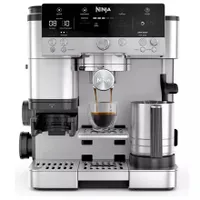
If you're not sure whether the KitchenAid KF3 is the right espresso machine for you, here are three other options to keep in mind.
KitchenAid KF3: How I tested
I used the KitchenAid KF3 for two weeks, and having already spent time with the KF4, I was well versed with what to expect from the slightly lesser-specced machine. I prepared a wide range of drinks with and without milk, and used two different styles of coffee beans to test the IntelliGrind feature on the KF3.
I used a barista-style oat milk and full-fat dairy milk to test the automatic milk-foaming system, and ran the machine’s recommended cleaning cycles.
Read more about how we test
First reviewed July 2026
