


- US Army awarded $4.15 billion in counter-drone contracts to 10 companies
- Seven of the ten winners each received a $500 million base award
- The framework carries a maximum ceiling of $7 billion across all awards
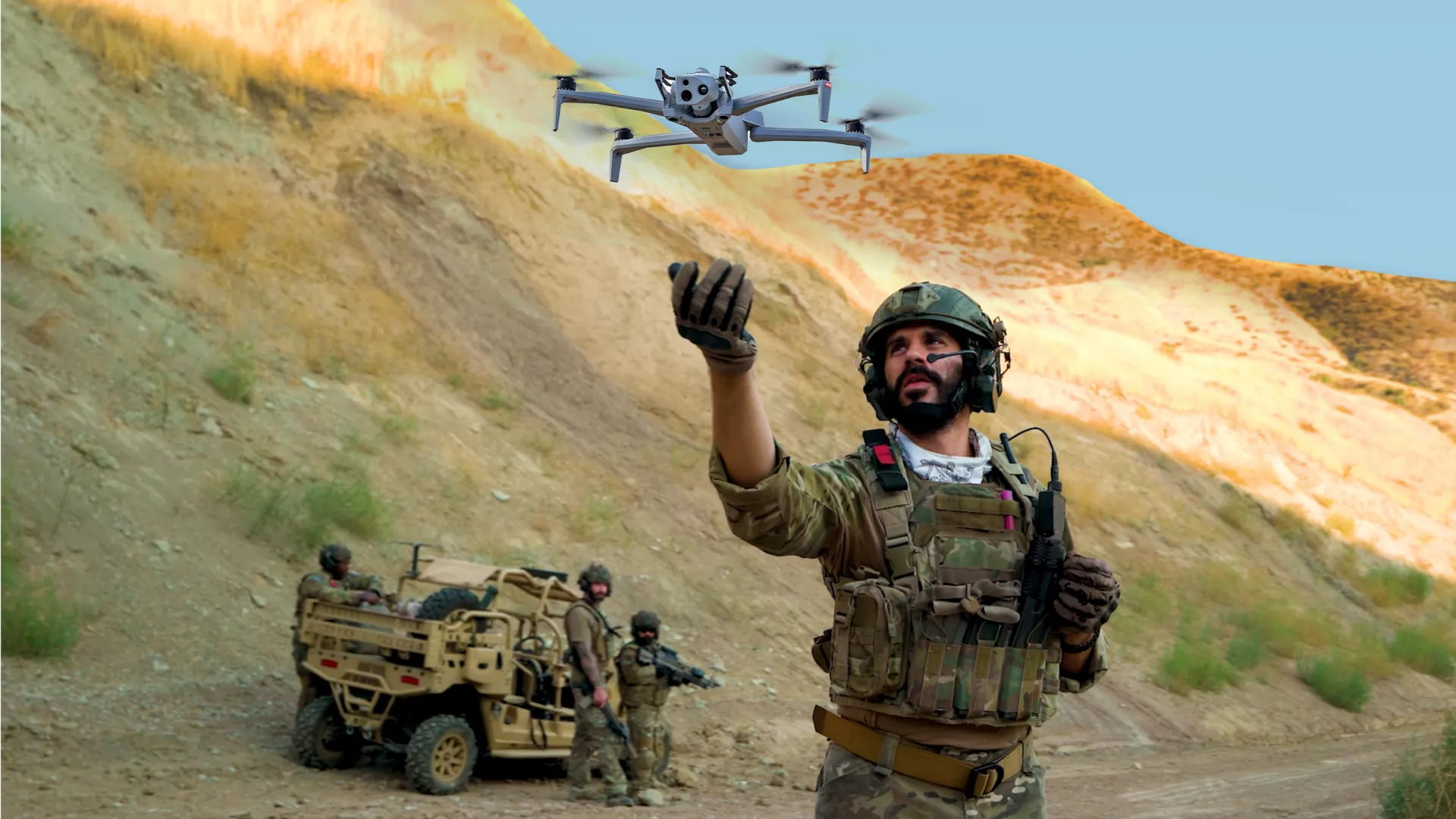
The US Army has awarded contracts worth $4.15 billion to 10 companies developing technologies against cheap drones threatening military installations and critical infrastructure across the country.
The awards fall under Domestic Shield, a Department of Defense initiative intended to strengthen protection against unmanned aircraft without restricting procurement to individual suppliers.
Seven companies will receive $500 million each, while three others secured smaller awards, establishing a multi-vendor arrangement with a maximum value of $7 billion.
Ten suppliers share billions in counter-drone contracts
Allen Control Systems, Digital Force Technologies, DroneShield, L3Harris WESCAM, Napatree Technology, RADA Technologies and SRC each received contracts with $500 million base values under the initiative.
Echodyne and PVP Advanced EO Systems secured awards worth $250 million apiece, while Smart Shooter received a contract valued at $150 million.
The contracts allow military services, federal agencies and allied partners to obtain commercially available counter-drone equipment through a common procurement framework rather than relying on separate purchasing arrangements.
Officials expect further awards below the established contract threshold before the end of October 2026, keeping additional suppliers eligible to participate as procurement continues.
The Army is working with Joint Interagency Task Force 401, the Pentagon unit responsible for coordinating efforts against unmanned aerial threats, to administer the initiative.
The arrangement uses multiple suppliers to maintain competition and reduce dependence on technologies controlled by individual vendors.
Open architecture allows different counter-drone systems to work together
The contracted technologies include robotic weapon stations, optical rifle sights, compact radars, long-range tracking cameras, and command-and-control software.
These systems handle different tasks, including detecting aerial threats, tracking their movements and supporting responses, making coordination between equipment an important consideration.
To support that coordination, the Army is requiring open architecture standards that allow equipment from different suppliers to connect with existing defense networks.
“This multi-vendor marketplace enforces strict open architecture standards, breaking proprietary vendor lock, and ensuring new technologies can immediately integrate into our existing defense networks,” said Brent Ingraham, assistant secretary of the Army for Acquisition, Logistics and Technology.
The need for these systems became more apparent during the 2026 US–Iran war, when Iranian drone attacks damaged American military facilities and equipment across the Middle East.
On March 3 2026, two Iranian drones struck the US Embassy in Riyadh, Saudi Arabia, causing physical damage estimated at approximately $11.5 million.
Iranian drones also struck a fuel tank and damaged a US Army asset in Kuwait, while attacks against power stations and desalination plants continued after the ceasefire.
In Saudi Arabia, Iranian drones struck a CIA station in Riyadh, while attacks within a week left 29 American servicemen wounded.
Congressional Research Service estimated that 81 American aircraft and drones were destroyed or damaged during the conflict, with potential losses reaching $3.3 billion.
Iran carried out many of these attacks with swarms of cheap drones and bombs, necessitating affordable counter-drone systems that can intercept incoming threats without exhausting expensive military assets.
Via The Drone Front

Follow TechRadar on Google News and add us as a preferred source to get our expert news, reviews, and opinion in your feeds.
