
 Become a TechRadar Insider





We’re now days away from WWDC 2026 — Apple’s major software showcase of the year. There we expect to (finally) see the new and improved Siri alongside some major software upgrades, stretching from iOS to macOS.
But this week was arguably just as momentous in the world of tech. Scroll down and you’ll see we’ve rounded up the seven most important tech stories of the past seven days, from Sony’s State of Play showcase to everything we saw at Taiwan's Computex, the world's biggest computing show.
Before you catch up with this week’s tech news, why not test yourself on last week’s eight biggest tech stories to see how good your memory is? Take the quiz below, or scroll on for the biggest tech news of the week...
7. Sony's State of Play lit our gaming fires

Gaming’s nouveau-E3, aka Summer Games Fest, has had various festivities this week ahead of the main showcase. One of which was Sony’s latest State of Play.
Thanks to Sony we got a better look at Marvel’s Wolverine in all of its goryness, a new trailer and a demo for incredible sword fight (and potential GOTY) Onimusha: Way of the Sword, and to top it all off a sneak peek at the next God of War title: Laufey.
We’re writing this up ahead of Summer Game Fest’s main event (it was last night if you’re reading this Saturday morning) but be sure to check out our SGF coverage over on TRG.
6. Lego’s new Pokémon sets left us thunder-shocked

This week Lego’s Smart Play sets evolved with 12 new Pokémon builds that we instantly fell in love with. The biggest win here — besides the incredibly well designed ‘mons (there’s 20 in all) — is that these sets don’t feel like they need the Smart Brick.
Sure Pikachu’s treehouse has several awesome Smart brick integrations that allow you to catch, train, feed and rest your critter as if the electric mouse were alive, but the physical play features enable all of this while the Smart brick just enhances things.
The same is true for each of the other builds, and they feel like a serious improvement over what came from the Star Wars Smart Play sets just a handful of months ago.
- Read the full story: I spent 3 hours with Lego’s new Pokémon Smart Play sets — they solve the Smart Brick’s biggest problems
5. Polaroid launched the 'world's smallest' instant camera

There's been a big trend in miniature cameras recently, and following in their slipstream is the latest version of the Polaroid Go — an instant camera that's designed for anyone who wants a big hit of nostalgia from a small, affordable snapper.
The Go 3 doesn't reinvent the series, adding a stronger flash, sharper lens and even smaller dimensions (Polaroid claims it's the 'world's smallest' instant model). But it might just be the ultimate summer festival camera, coming in a range of bold colors (white, black, teal blue, ice blue or purple) and costing $89.99 / £79.99 (around AU$150).
Just remember to leave some spare change for extra 'Go' film — the little 2.6 x 2.1-inch prints cost around $21.99 / £18.99 / AU$40 per 16-shot roll, so use them wisely.
- Read the full story: Polaroid just launched the ‘world’s smallest instant camera’
4. The Sonos Beam got a new rival

WiiM has been quietly positing itself as the answer to “What would happen if we built a Sonos ecosystem but without the app that made fans turn their backs?” for quite some time now. The remarkable WiiM Sound wireless speaker launched last year, and now the firm has released its first soundbar.
The new WiiM Bar (for that is its name) is essentially a direct rival to the Sonos Beam (2nd Gen) in terms of pricing and how the company wants you to use it, but it's bigger, beefier and has real upfiring drivers for Dolby Atmos — which Sonos' Beam lacks.
It also features automatic room correction, multi-room grouping, support for over 20 streaming services and, unusually, a glass-covered 2.1-inch touch display on the front. An odd choice when the last thing you want is an illuminated visual distraction right near your TV screen when settling down for movie night?
We spoke to WiiM's CEO, Dr Lifeng Zhao, about it all (good news! You can turn it off while watching movies or shows) and he's confident users will find it valuable for music streaming when not watching TV — which is how a lot of people use their soundbar, you know…
- Read the full story: WiiM's first soundbar is the same price as the Sonos Beam, but it's bigger, beefier and has real upfiring drivers
3. Android fans got a big June upgrade
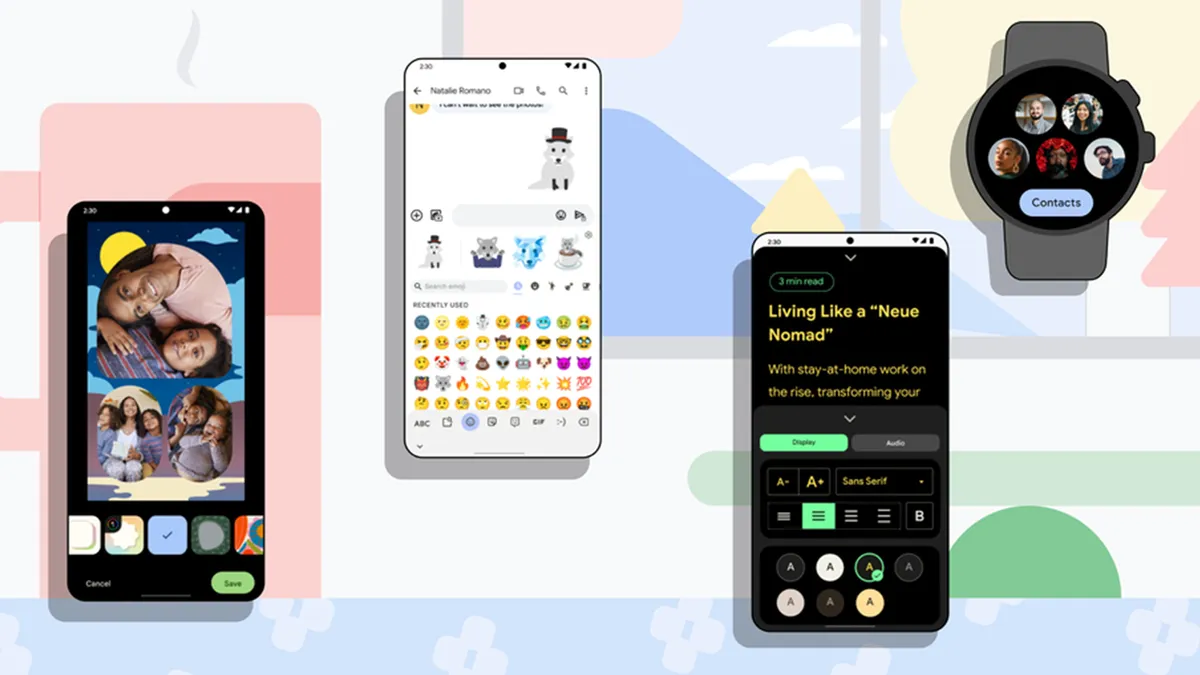
iPhone fans are patiently waiting for the software gifts that’ll be revealed at WWDC 2026 on Monday, but Android owners got some new toys to unwrap this week — courtesy of a generous June feature drop.
The biggest upgrade is arguably Fake Call Detection for foiling pesky scammers. The downside is that it’s limited to Pixels (and select non-Pixel devices), but there were new features for most other Android phones, too.
These include wider AirDrop support and Google Photos Wardrobe, a new way to track your clothes and combine them into outfits. We’ll try not to take that as a dig at our fashion sense thanks, Google.
2. We picked our favorite tech from Computex

Each year the Computex computing show highlights some incredible computers, and that was no different this year.
The biggest news camera from Nvidia (see below), but there’s so much else to talk about. Dell revived the XPS line with the latest Dell XPS 13 model being billed as a direct competitor to the MacBook Neo. Acer was also chasing the Neo’s popularity, while MSI showcased a beautiful, but not overly affordable MSI Titan 18 HX Dragon Edition Draco Epic that was a sight to behold.
Though but doesn’t hold a candle to the creative builds we also saw — which included PCs made to look like Matrix robots, a miniature science lab, and a giant mechanized arm.
- Read our full Computex coverage
1. Nvidia’s RTX Spark took on Apple’s M5

Computex 2026 was full of several huge announcements for PC users, but none was bigger than Nvidia's introduction of the new RTX Spark. This is an Arm-based chip packed with 20 CPU cores and 6,144 CUDA cores based on Blackwell architecture — and an integrated GPU that is said to be equivalent to an RTX 5070 GPU, which is great for gaming.
It’s best suited for, well, Arm-based laptops, which are known for their exceptional battery life, and Team Green has effectively green-lit its rivalry with Apple and its successful M-series chips (which are also Arm-based).
Nvidia, Microsoft, and Arm all lauded the RTX Spark as a ‘new era of computing’, and while that is the case for laptops, Nvidia’s CEO Jensen Huang has also made it clear that the chip won’t be used for handhelds — which will undoubtedly disappoint some gaming enthusiasts. Still, this is undoubtedly destined to be one of the biggest computing moments of 2026.
- Read the full story: Nvidia just unveiled its RTX Spark Arm 'superchip'

Follow TechRadar on Google News and add us as a preferred source to get our expert news, reviews, and opinion in your feeds.
